
History of the programs
Provisional content: to be reviewed and completed with the text from the current website.
METALPLA and ESTRUMAD
It was with the arrival of personal computers in Spain, in 1982, that the authors began developing and marketing structural analysis programs used exclusively for determining deformations and internal forces. These programs, marketed in 1984 for IBM personal computers by the company COMPUTER MADRID S.A., had the following names and contents:
- GENERIC FRAMES: Plane system of members with loads contained in its plane.
- GRILLAGES: Plane system of members with loads perpendicular to its plane.
- SPACE FRAMES: Spatial system of members with loads applied in space.
The calculation source code of these programs was published in Volume III of the book Cálculo de Estructuras: Programación (Structural Analysis: Programming), published in 1981 by the Fundación Conde del Valle Salazar.
Subsequently, an application program for reinforced concrete structures was developed:
REINFORCED CONCRETE FRAMES. Includes section design, calculation of internal forces, graphical printout of reinforcement and quantity take-offs, in accordance with EH-82.


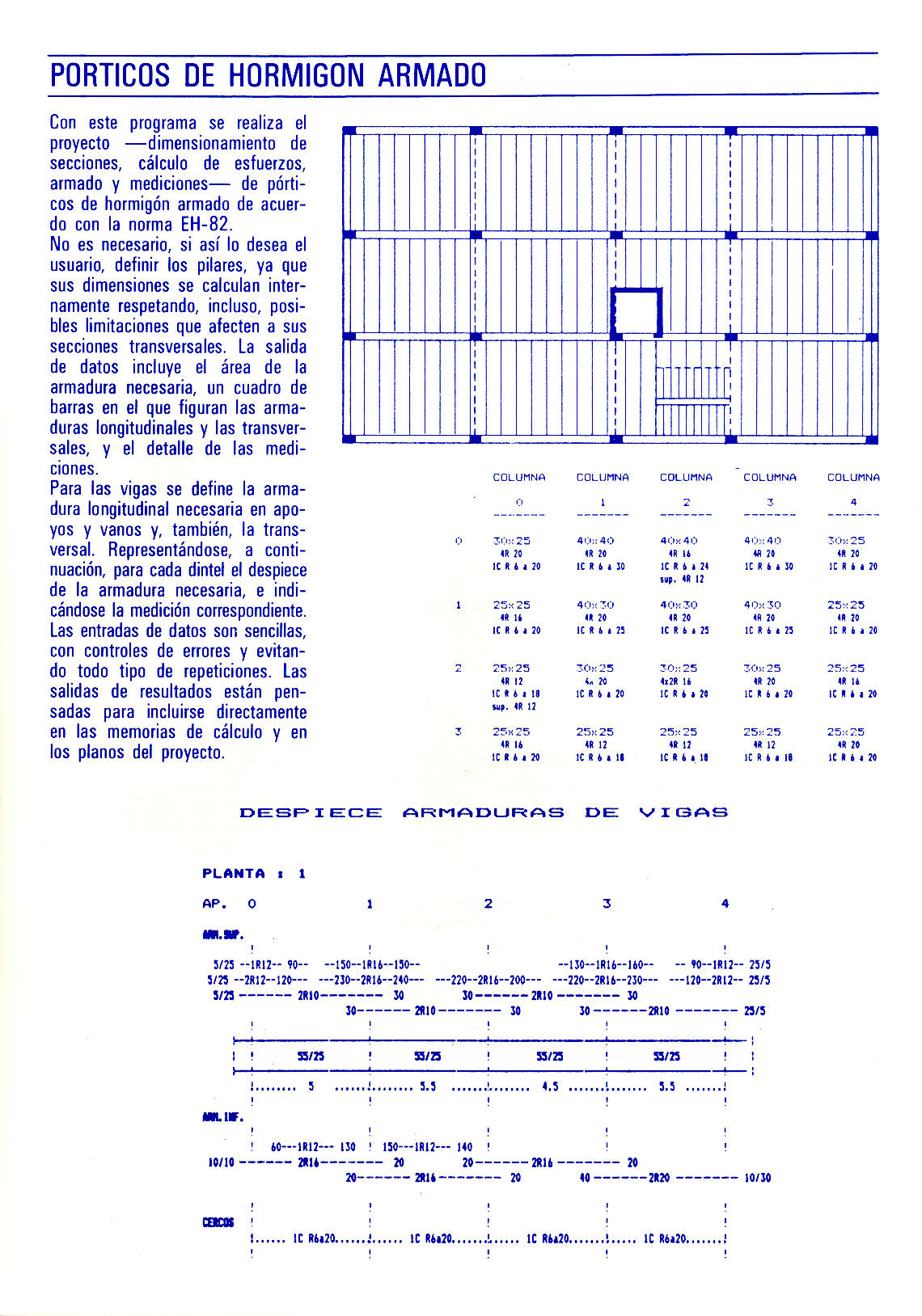
Computer Madrid SA brochure. 1984
Between 1985 and 1990 the authors developed the first Spanish programs for steel construction marketed in Spain. They were distributed by BELLISCO-SOFTWARE and delivered to users on 5¼-inch floppy disks. The calculations, carried out in accordance with the MV 103 standard for steel structures, had the following names and contents:
- INDUSTRIAL BUILDING FRAMES: Includes automatic sizing and checking of beams and columns.
- BUILDING FRAMES: Includes automatic sizing and checking of beams and columns.
- TRUSSES: Once the geometry of the structure, the section types chosen for the members, the basic load cases and the load factors have been defined, the program selects the required sections.
- CRANE RUNWAY BEAMS: Once the capacity and span of the overhead crane and the spacing between columns have been defined, the program selects the crane runway beam section in accordance with the em_62 Instruction.
- BUILT-UP BEAMS: Once the geometry and type of beam (continuous beam, frame rafter, etc.), the load cases and the load factors have been defined, the program selects and prints the cross-sections of the built-up beam with the minimum weight.
- STEEL SPACE FRAMES: Program for automatic sizing and checking of steel structures with spatial analysis.
Cover of the METALPLA program brochure
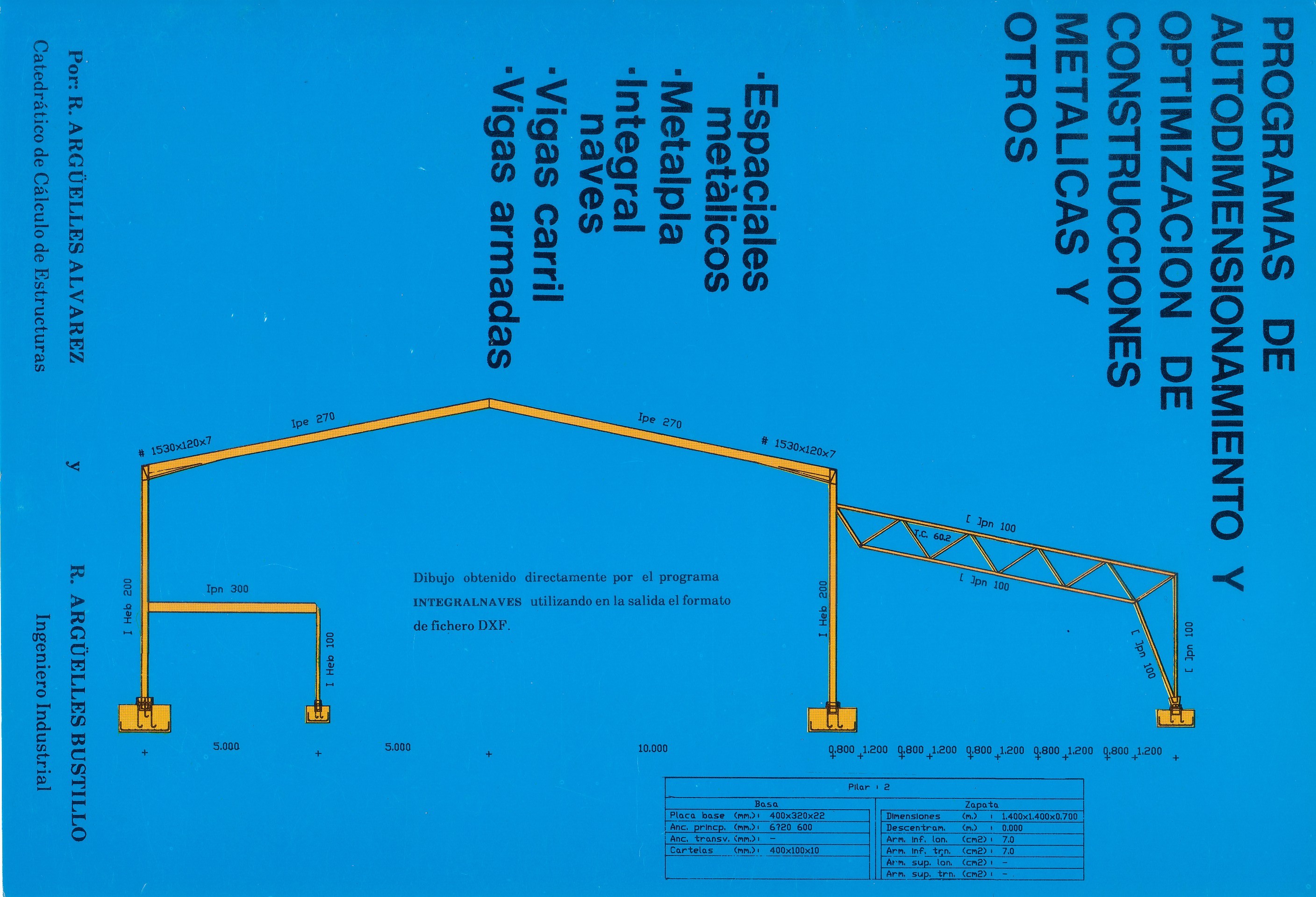
It was in 1992 that almost all the plane steel structure programs (Industrial Building Frames, Building Frames and Trusses) were merged, and the BASE PLATES AND FOOTINGS program was developed; incorporated into the rest, it gave rise to the first METALPLA_2D program.
This program, with many features, was exclusively for plane steel structures.
At this time, coinciding also with the publication of the book Fundamentos de Elasticidad. Programación por Elementos Finitos (Fundamentals of Elasticity: Finite Element Programming), a Finite Element program was developed, included in the same book and published by Bellisco S.A. The programs were delivered on 5¼-inch floppy disks.
In 1993 Volume IV of the book La Estructura Metálica Hoy (Steel Structures Today) was published, which included the ESTRUMET steel structures program, also edited and published by Editorial Bellisco.
 Volume III of the book Cálculo de Estructuras: Programación. 1981
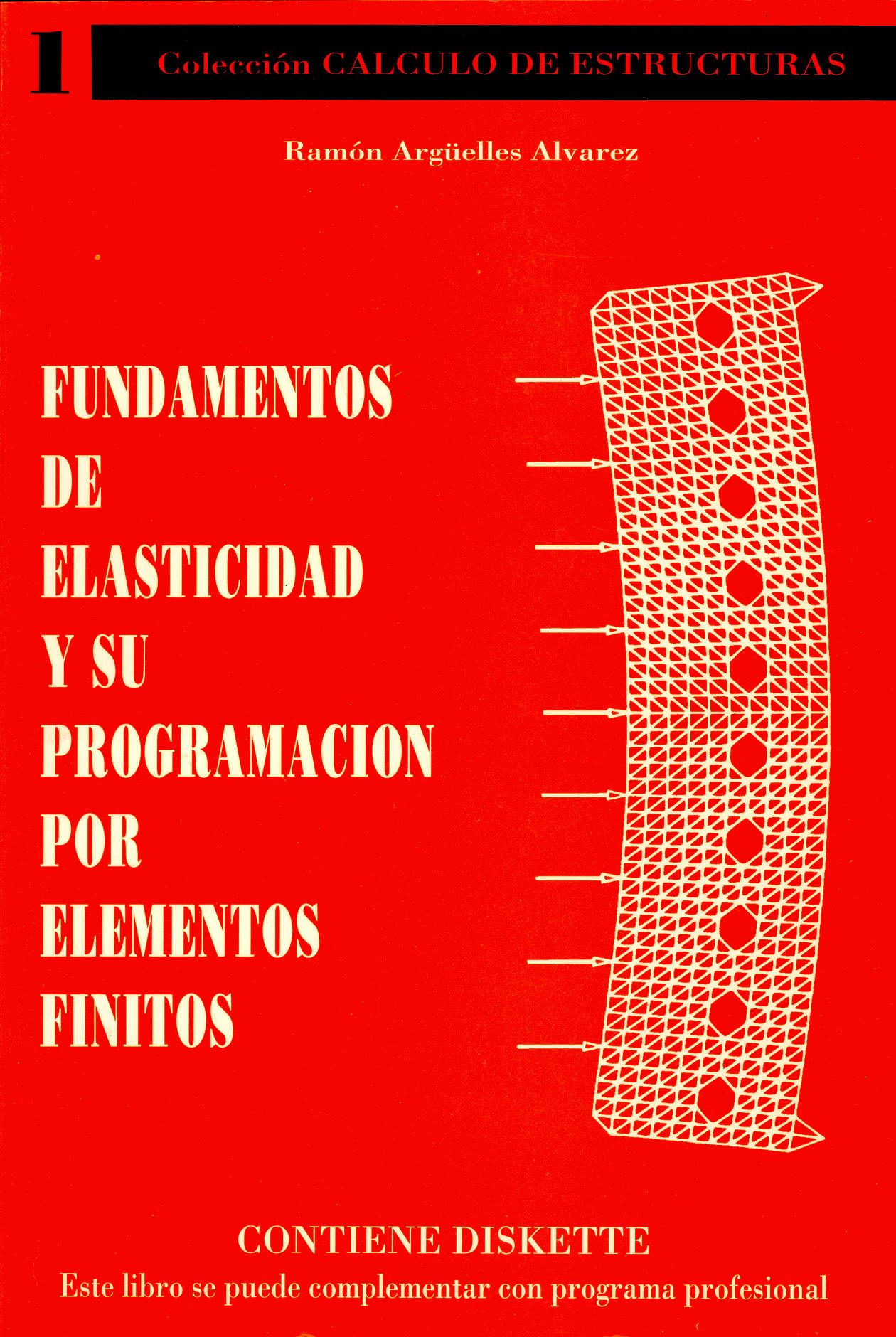 Finite element book and program. 1992
 Steel structures book and program. 1993
Some of the authors’ publications on structural programming
In 1995, following the same lines as METALPLA_2D, the ESTRUMAD_2D program, version 1.0, was developed in MS-DOS for the design of Timber Structures in accordance with Eurocode 5. It was also the first timber structures program marketed in Spain.

Cover of the ESTRUMAD_2D User Manual. 1995
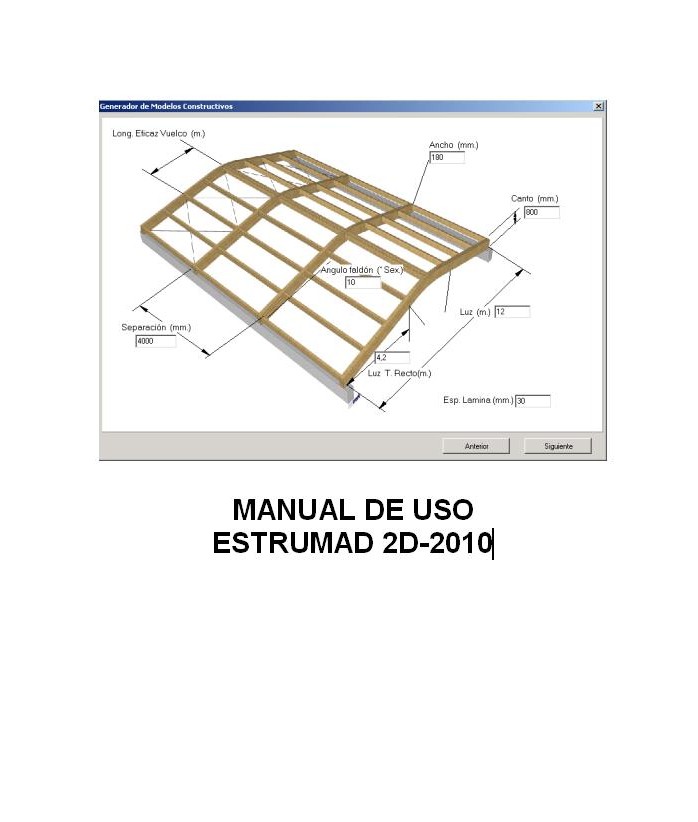
Cover of the ESTRUMAD_2D user manual. 2010

Cover of the METALPLA_2D user manual. 2010
Some covers of the METALPLA and ESTRUMAD user manuals
During 1995-1997, still in MS-DOS, various improvements and updates were made to the METALPLA_2D (in accordance with EA 95) and ESTRUMAD_2D (in accordance with EC 5) programs.
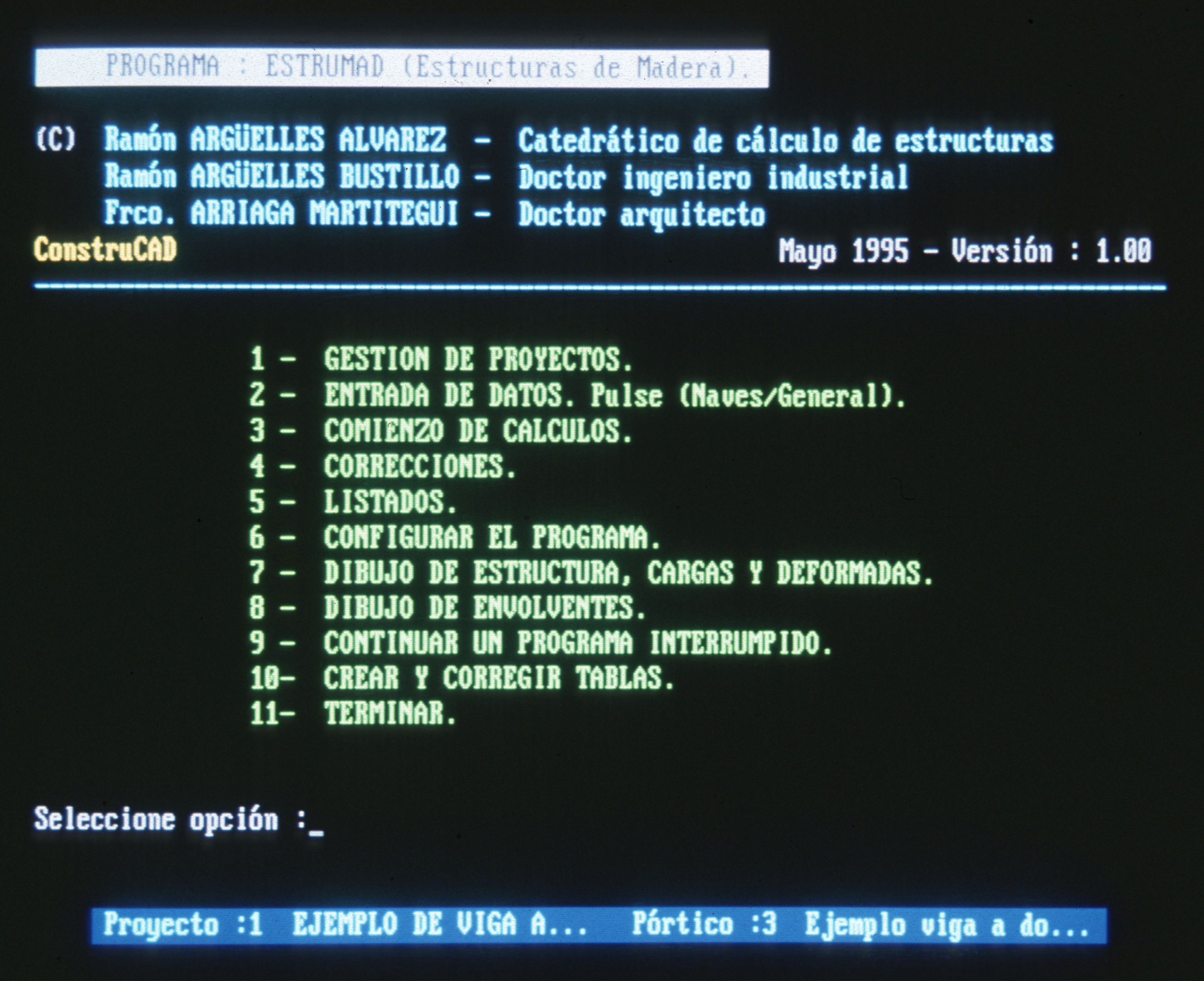
Main screen of ESTRUMAD_1995 in MS-DOS
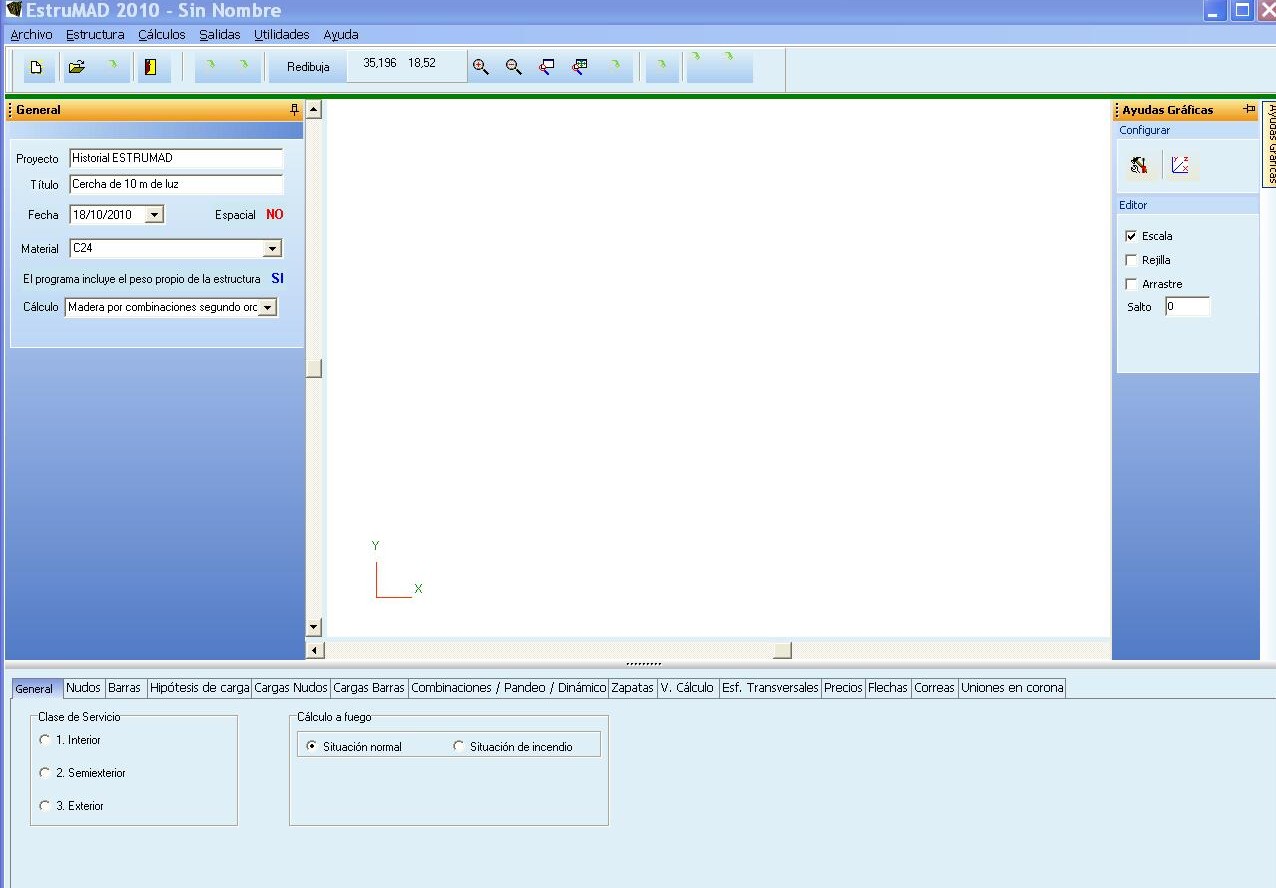
Main screen of ESTRUMAD_2010
Main screens of the programs in MS-DOS and in WINDOWS
The downward trend in the prices of the programs is worth noting. Today’s programs, with far superior features, cost approximately 5% of the original price in constant pesetas.
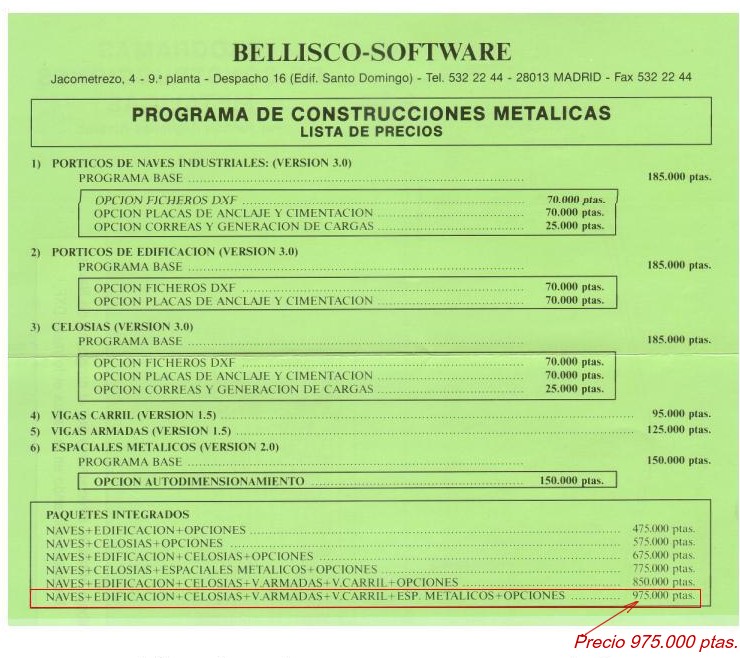
In 1998 the first programs for Windows 3.11 and Windows 95 were marketed, and the remaining steel applications (crane runway beams and steel space frames) were merged into METALPLA_2D. As a result, the METALPLA program came to include two modules: METALPLA_2D and METALPLA_3D. The ESTRUMAD program, initially developed in 2D, also incorporated spatial analysis at this time in ESTRUMAD_3D. All the programs were delivered on CDs.
In 2004 the entire data input was rebuilt using new software tools, and the programs were marketed for Windows 95, 98 and 2000. In 2006 the calculation methods published at that time in the Spanish Technical Building Code (CTE) were incorporated into both programs. Since then the programs have been downloaded over the internet.

5¼-inch floppy disks with the Crane Runway Beams program
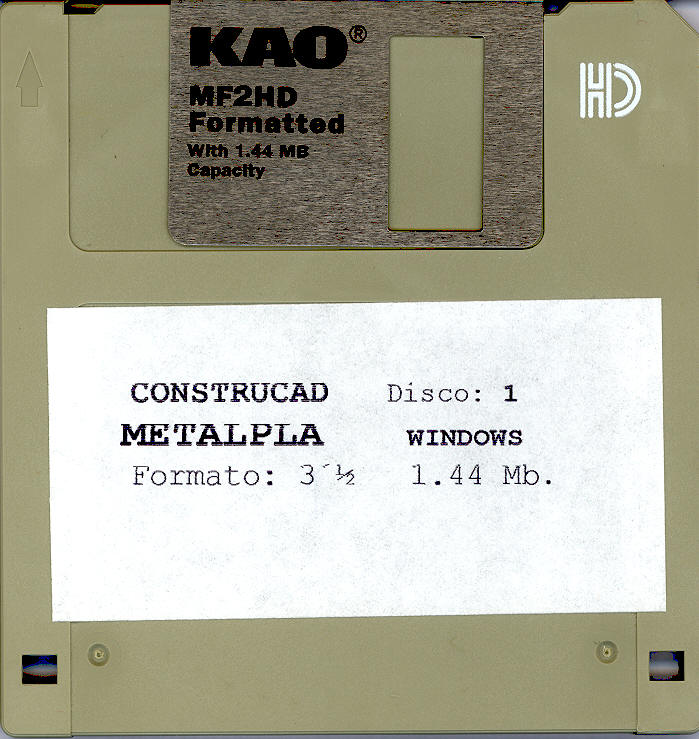
3½-inch hard diskettes with the METALPLA program
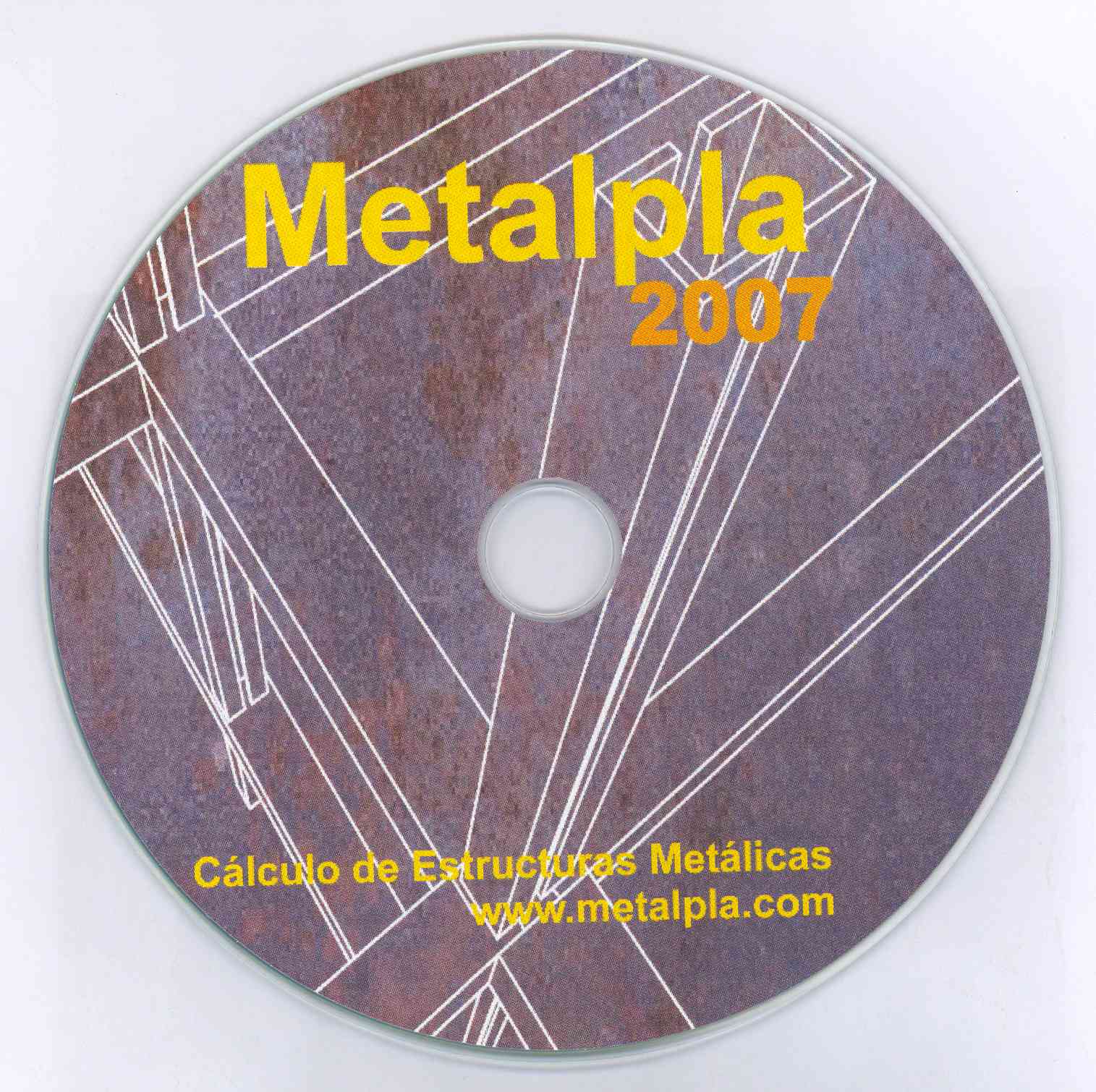
CD with the METALPLA 2007 program
Different releases of the METALPLA and ESTRUMAD programs
Every year the programs are updated as a result of changes in standards, the addition of more powerful data input and results output, and the application of new software tools.
The programming language of METALPLA and ESTRUMAD.
1980. The first programs for frames, footings and rigid-plastic analysis were developed. This was done on a Sord Mark IV computer with a Z80 processor and 64 KB of RAM. It had a monochrome screen and very basic graphics. The programming language was BASIC.
1984. The first commercial programs were developed in Microsoft Advanced BASIC (BASICA). They were then compiled with the Microsoft Basic Compiler for MS-DOS version 5. These programs were limited to 64 KB for code and data, so they were split into modules that shared certain common variables, and data was passed between these modules in files.
1989. The switch was made to version 7 of the Microsoft Basic compiler and the 64 KB limitation was removed, as there were now 64 KB for code and the rest of the RAM, up to a maximum of 640 KB in total, for data if the data was dynamic.
1990 All the code was moved to Quick Basic, with the advantage of replacing subroutines with functions and procedures, making the code more compact and efficient. Development continued up to version 4.5 of Quick Basic. Some specific modules, such as DXF file generation and structure display, were developed in 1991 in Turbo Pascal (Borland), and in 1992 they were moved to Turbo C++ (Borland).
1994. Work began with Visual Basic version 1.0, developing these applications for Windows 3.0, which meant rewriting the code once again. The applications were 16-bit, so there were still limitations. Versions for MS-DOS continued to be made, as demand was still highest for that operating system. The auxiliary C++ code was rewritten with Borland C++ versions 4 and 5. Development continued in this way up to version 3 of Visual Basic.
1996. Development with Visual Basic 4.0. These versions were for 16 and 32 bits (they had two different installation programs).
1997. Development with Visual Basic 5.0 and C++ Builder 3. 16 bits were abandoned for good and everything moved to 32 bits.
1999. All development for MS-DOS was abandoned for good; the frames, trusses and grillages programs were merged, giving rise to Metalpla. The space frame program would be integrated into Metalpla later. The first commercial version of the timber structures design program (Estrumad) appeared.
2004. The entire interface was rewritten again in C++ Builder 6, completely changing the look of the programs and greatly improving the user interface. Certain parts of the code were still in Basic, so Visual Studio 6 continued to be used.
2008. Development with Rad Studio 2007 (CodeGear). Basic code was still retained, so Visual Studio 6 continued to be used.
2010. Migration to Rad Studio XE (Embarcadero) began in order to prepare the programs for 64-bit operating systems (Windows 7). All code written in BASIC was abandoned for good.
2012. The first version of Metalpla XE was released, written entirely in C++. Estrumad was also completely rewritten in C++.
2014. With the launch of Metalpla XE3 and Estrumad XE3, the first 64-bit versions appeared.
- With the launch of Metalpla XE4 and Estrumad XE4, the first versions using all the processors of the machine appeared.
2015. Metalbuckling was born, a dedicated program for calculating buckling lengths, modal displacements and critical factors.
2015. Steel-concrete composite beams program. Versions for Windows in 32/64 bits and the first version for Mac OS X.
2016. Connection with Power Connect for the design of bolted connections.
2016 Development of Estructura Script, a program for generating structures with the Basic programming language.
2016 EstruPAD, an Android and iOS program for designing steel structures. A reduced version of Metalpla.
2017 Mediest, a program for structural quantity take-offs.
2017 Resulgrid, a simplified results output that can be exported to Excel.
2017 Metalpla XE7. Estrumad XE7. Major improvements were made to data input, with wizards that make it easier to enter geometry and loads.
2019 Metalpla XE8. Estrumad XE8. Each was split into two products, the standard edition and the Plus edition. In the Plus edition structures can be viewed with solid modelling, and new typologies are created to automate data input. The programs update automatically.
2020 Metalpla XE9. Estrumad XE9.
2021 Metalpla XE10. Estrumad XE10.
2022 Metalpla XE11. Estrumad XE11. Creation of the new Uniomad connections program.
2025 Metalpla XE12. Estrumad XE12. Timber-concrete composite beams: Vighormad.